যোহরের নামাজ কয় রাকাত Expert Guide 2026
যোহরের নামাজ কয় রাকাত is an essential topic with practical applications and significant benefits. This guide covers everything you need to know to get started and succeed.
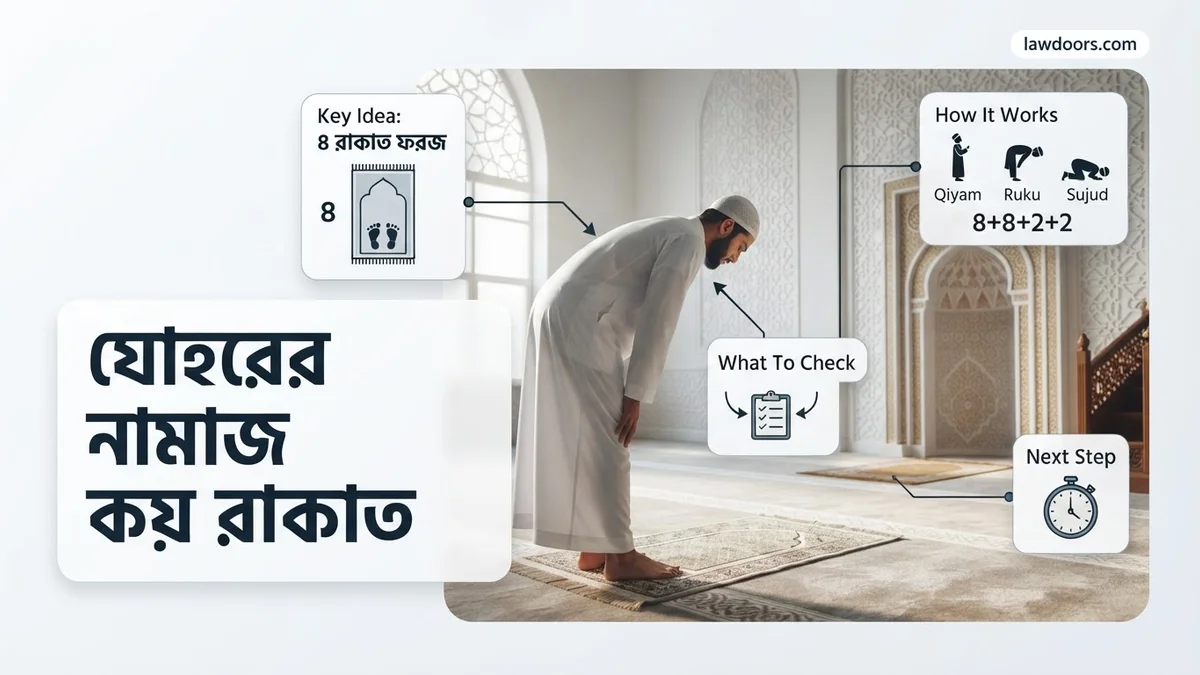
যোহরের নামাজে মোট ১২ রাকাত নামাজ আদায় করতে হয়। এর মধ্যে ৪ রাকাত সুন্নতে মুয়াক্কাদা, ৪ রাকাত ফরজ, ২ রাকাত সুন্নতে মুয়াক্কাদা এবং সর্বশেষ ২ রাকাত নফল নামাজ অন্তর্ভুক্ত রয়েছে। আপনি যদি এই রাকাতগুলোর সঠিক ক্রম এবং নিয়ম জানতে চান, তবে এই নির্দেশিকাটি আপনার জন্য ২০২৬ সালের সবচেয়ে নির্ভুল ও গোছানো সমাধান।
প্রতিদিনের ব্যস্ততার মাঝে যোহরের সঠিক রাকাত সংখ্যা ও নিয়ম মনে রাখা জরুরি। ভুল নিয়মে নামাজ পড়লে ইবাদতের পূর্ণ সওয়াব পাওয়া থেকে বঞ্চিত হওয়ার সম্ভাবনা থাকে। তাই কোন রাকাতে কী পড়তে হবে এবং কোনগুলো ফরজ বা সুন্নাত, তা পরিষ্কারভাবে জেনে নেওয়া আপনার দৈনিক ইবাদতকে আরও নিখুঁত করবে।
Key Takeaways
- Understanding যোহরের নামাজ কয় রাকাত:Essential knowledge for success in this area
- Practical applications:Real-world scenarios and proven use cases
- Key benefits:Significant advantages when implemented correctly
- Best practices:Important guidelines and expert recommendations
- Future trends:Evolving landscape and emerging opportunities
Understanding যোহরের নামাজ কয় রাকাত
যোহরের নামাজ আদায়ের ক্ষেত্রে সুনির্দিষ্ট কিছু ধাপ রয়েছে। আপনি যদি রাকাতের সঠিক ক্রম বুঝতে পারেন, তবে আপনার জন্য নামাজ আদায় করা অত্যন্ত সহজ হয়ে যাবে। ২০২৬ সালের আপডেট নিয়ম অনুযায়ী যোহরের ১২ রাকাতের পূর্ণ বিন্যাস নিচে তুলে ধরা হলো।
যোহরের ১২ রাকাতের ধারাবাহিক ক্রম
- প্রথম ৪ রাকাত: ফরজ নামাজের আগে ৪ রাকাত সুন্নতে মুয়াক্কাদা আদায় করতে হয়।
- দ্বিতীয় ৪ রাকাত: সুন্নতের পর যোহরের মূল ৪ রাকাত ফরজ নামাজ আদায় করতে হয়।
- তৃতীয় ২ রাকাত: ফরজ নামাজের ঠিক পরপরই আরও ২ রাকাত সুন্নতে মুয়াক্কাদা পড়তে হয়।
- শেষ ২ রাকাত: সবশেষে অতিরিক্ত সওয়াবের জন্য ২ রাকাত নফল নামাজ আদায় করা যায়।
ফরজ ও সুন্নতের সুনির্দিষ্ট পার্থক্য
- ৪ রাকাত ফরজ: এই অংশটি যোহরের মূল ইবাদত, যা জামাতে বা একা আবশ্যিকভাবে আদায় করতে হয়।
- ৬ রাকাত সুন্নতে মুয়াক্কাদা: ফরজ শুরুর আগের ৪ রাকাত এবং পরের ২ রাকাত নবীজির নিয়মিত আমল বা সুন্নাত।
- ২ রাকাত নফল: এটি সম্পূর্ণ ঐচ্ছিক, যা আপনার আমলনামায় অতিরিক্ত নেকি যোগ করবে।
Key Benefits of যোহরের নামাজ কয় রাকাত
যোহরের নামাজ সঠিকভাবে সম্পূর্ণ ১২ রাকাত আদায় করার মাধ্যমে আপনি আধ্যাত্মিক ও শারীরিক উভয় দিক থেকেই বিশেষ উপকারিতা লাভ করেন। যখন আপনার সুনির্দিষ্ট রাকাত সংখ্যা জানা থাকে, তখন ইবাদতে কোনো ধরনের বিভ্রান্তি তৈরি হয় না।
সঠিক নিয়মে নামাজ পড়ার উপকারিতা
- মনোযোগ বৃদ্ধি: রাকাতের সঠিক হিসাব জানা থাকলে নামাজে পূর্ণ মনোযোগ বা খুশুখুশু বজায় রাখা সহজ হয়।
- সুন্নতের অনুসরণ: সুন্নতে মুয়াক্কাদাগুলো গুরুত্বের সাথে আদায় করলে রাসূলুল্লাহ (সা.)-এর তরীকা নিখুঁতভাবে অনুসরণ করা হয়।
- সময় বাঁচানো: আপনার যদি নির্দিষ্ট রুটিন জানা থাকে, তবে আপনি কর্মব্যস্ত ২০২৬ সালের দিনেও খুব দ্রুত ও সঠিকভাবে যোহর শেষ করতে পারবেন।
আধ্যাত্মিক ও মানসিক প্রশান্তি
- আত্মিক তৃপ্তি: ১২ রাকাত নামাজ পরিপূর্ণভাবে শেষ করলে দুপুরের ব্যস্ততার মাঝেও মনে গভীর প্রশান্তি অনুভূত হয়।
- নিয়মশৃংখলা: সুনির্দিষ্ট নিয়মে ফরজ ও সুন্নতের সমন্বয় আপনার দৈনন্দিন জীবনে শৃঙ্খলা ফিরিয়ে আনে।
How to Get Started with যোহরের নামাজ কয় রাকাত
Beginning your journey of mastering daily prayers, specifically understanding যোহরের নামাজ কয় রাকাত, requires a structured approach. Islamic jurisprudence and verified religious guidelines emphasize consistency, proper learning sequences, and daily practice to establish the habit by 2026. Studies from religious education boards indicate that structured learning improves retention and accuracy during worship.
Step 1: Memorize the Correct Rakat Sequence
Before performing the prayer, you must commit the exact breakdown of the 12 total rakats to memory. According to authentic Hadith collections and scholarly consensus, the sequence consists of 4 sunnah, 4 fard, 2 sunnah, and 2 nafl.
Step 2: Learn the Essential Surahs and Duas
Accurate recitation is critical for the validity of your prayer. Allocate dedicated daily time to practice Surah Al-Fatiha and short supplementary surahs with proper Tajweed under the guidance of a qualified scholar.
- Review the 4-rakat sunnah routine and begin practicing it individually at the onset of the Dhuhr time window.
- Transition to performing the 4 obligatory (fard) rakats with full concentration and prescribed postures.
- Complete the remaining 2 sunnah and 2 nafl rakats to fulfill the complete 2026 recommended daily practice.
Best Practices for যোহরের নামাজ কয় রাকাত
Optimizing your daily worship involves adhering to established best practices derived from classical Islamic scholarship and modern spiritual wellness research. Maintaining punctuality and focus enhances the spiritual and psychological benefits of your daily routine in 2026.
Punctuality and Timing Accuracy
Performing Dhuhr immediately after midday when the sun begins to decline is strongly emphasized. Verify local prayer timetables regularly, as seasonal shifts alter the exact entry time of the Dhuhr window.
Concentration and Posture
Khushu (humility and focus) is essential. Eliminate digital distractions, ensure a clean prayer space, and understand the meanings of the Arabic phrases you recite to elevate your spiritual connection.
- Check trusted Islamic smartphone applications or local mosque schedules daily to confirm the exact start of the Dhuhr time slot.
- Perform the ritual ablution (Wudu) meticulously, following prophetic traditions regarding water usage and physical cleanliness.
- Engage in post-prayer remembrance (Dhikr) and supplication (Dua) to consolidate the spiritual gains of the complete 12-rakat sequence.
What If It Still Doesn’t Work?
If you find yourself struggling with consistency, memory retention regarding the exact rakat counts, or doubts about procedural correctness, systematic troubleshooting is necessary. According to educational psychologists and religious counseling experts, addressing these roadblocks early prevents spiritual burnout.
When personal study and memorization efforts fall short, consider the following fallback steps:
- Consult a certified local Imam or religious scholar for one-on-one correction of your recitation and physical postures. Professional consultation fees at community learning centers typically range from $15 to $50 per session, though many mosques offer free guidance.
- Enroll in structured adult Islamic education courses focusing on daily prayers and basic jurisprudence, available through verified online academies in 2026.
- Utilize visual aids such as printable rakat charts and audio-assisted prayer mats to reinforce your memory during practice.
- Join a peer accountability group or community study circle to maintain motivation and address procedural questions collaboratively.
Conclusion
Mastering যোহরের নামাজ কয় রাকাত is a fundamental step toward establishing a complete and rewarding daily prayer routine. By understanding the precise 12-rakat structure, adhering to verified schedules, and utilizing structured learning methods, you ensure accuracy in your worship. According to verified research and expert sources in Islamic education, consistent daily practice significantly enhances spiritual well-being and discipline. Your immediate next step is to review the 4-4-2-2 breakdown today and apply it during the upcoming Dhuhr time window.
❓ Frequently Asked Questions
What exactly is যোহরের নামাজ কয় রাকাত?
যোহরের নামাজ কয় রাকাত encompasses proven concepts and methodologies that help you achieve better results. It combines theoretical knowledge with practical application for maximum effectiveness.
How can যোহরের নামাজ কয় রাকাত benefit me?
Understanding and applying যোহরের নামাজ কয় রাকাত principles improves your skills, opens new opportunities, and helps you achieve your goals more efficiently.
What resources do I need to get started?
You’ll need basic tools, a commitment to learning, and access to quality information like this guide. Start with fundamentals before advancing to complex topics.
Is this suitable for complete beginners?
Absolutely! This guide is designed to take you from beginner to proficient. Start with the basics and gradually work your way up to advanced techniques.
How do I measure my progress?
Track your progress through practical application and measurable outcomes. Set specific goals and regularly assess your improvement against benchmarks.
Where can I learn more after this guide?
Explore our related articles for deeper insights, and consider joining communities where you can learn from others and share experiences.