
বাংলাদেশ ইসলামী ছাত্রশিবির 2026 Guide Real History & Facts
বাংলাদেশ ইসলামী ছাত্রশিবির is one of the largest student organizations in Bangladesh, officially established on February 6, 1977. It operates with a stated ideological foundation based on Islamic values and maintains a historically close relationship with Bangladesh Jamaat-e-Islami.
Bangladesh Islami Chhatrasibir is one of the largest and most influential student organizations in Bangladesh, functioning as the student wing of Bangladesh Jamaat-e-Islami. Founded on February 6, 1977, at the University of Dhaka under the name Islamic Student Organization, it was later renamed to its current title. The organization operates on Islamic ideology, aiming to shape the moral, educational, and political landscape of the country through religious principles.
Understanding Chhatrasibir is essential for anyone analyzing modern Bangladeshi politics, campus dynamics, and societal shifts in 2026. As the political environment evolves, knowing the factual history, ideological roots, and structural mechanics of this organization provides vital context for broader national trends.
Key Takeaways
- Founded on February 6, 1977, as an Islamic student wing.
- Operates with an ideology centered on Islamic values and education.
- Maintains close historical and organizational ties to Jamaat-e-Islami.
- Has experienced significant shifts in public visibility post-2024 political changes.
- Focuses heavily on moral training and academic welfare for students.
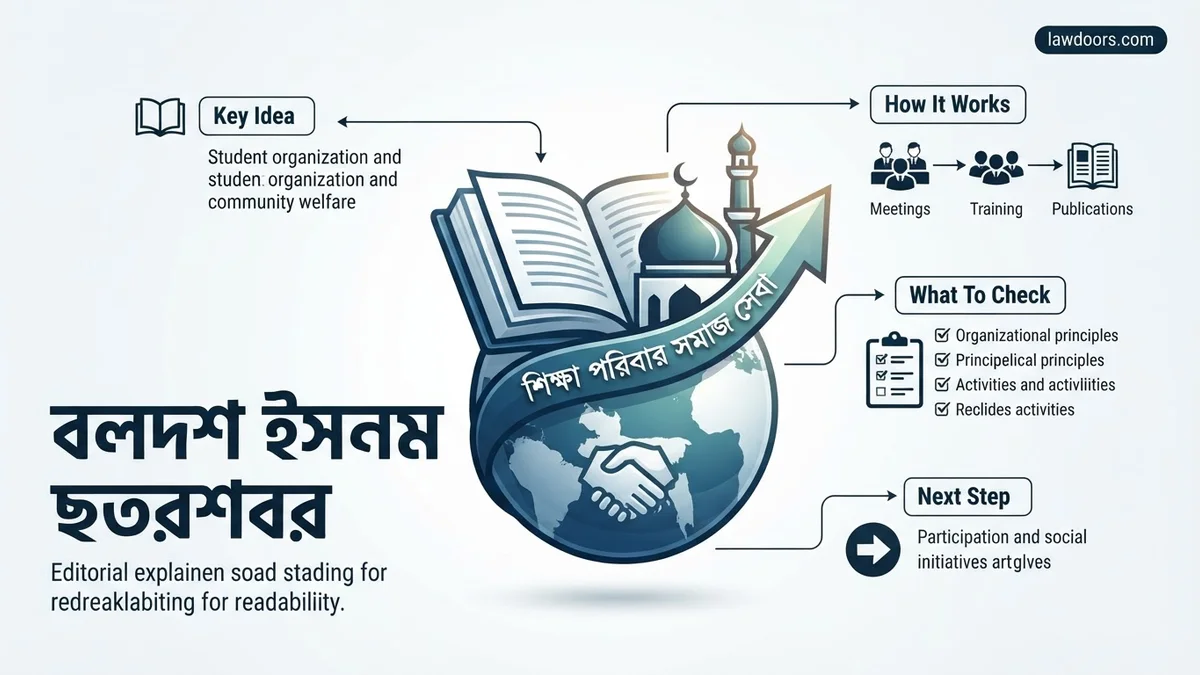
What Causes Political Dynamics and Ideological Shifts in Bangladesh Islami Chhatrasibir
Ideological Foundations and Islamic Revivalism
The core philosophy of Bangladesh Islami Chhatrasibir stems from the political Islam framework articulated by Maulana Abul Ala Maududi. You will find that their ideology focuses on establishing a society based on Islamic values, justice, and governance. Over the decades, this ideological anchor has remained steady, even as tactical shifts occurred in response to changing national politics.
- Core belief in the comprehensive system of Islam (Deen).
- Emphasis on individual moral character development combined with social activism.
- Opposition to secularist and leftist student political ideologies historically dominant on campuses.
Adapting to Sociopolitical Pressures in 2026
External pressures shape how Chhatrasibir operates on campuses across Bangladesh. Following major political transitions in recent years leading up to 2026, the organization has experienced shifts in public visibility and operational freedom. You can observe a transition toward more open engagement, intellectual discourse, and structured student welfare initiatives to rebuild its public profile and institutional presence.
- Shifting from underground or defensive organizing to visible campus participation.
- Leveraging social media and digital platforms for ideological dissemination.
- Focusing heavily on academic support, career guidance, and student services to gain wider acceptance.
How to Analyze the Organizational Structure, History, and Core Objectives
Hierarchical Framework and Decision-Making
Chhatrasibir maintains a highly disciplined, centralized organizational structure that distinguishes it from traditional mainstream student bodies in Bangladesh. When you examine their internal setup, you notice a strong emphasis on ideological training, absolute obedience to central directives, and a tiered membership system progressing from general sympathizers to committed cadres.
- Central Executive Council led by a central president (Central President).
- Branch networks spanning universities, colleges, and madrasas nationwide.
- Rigorous internal evaluation and tiered training modules for members.
Historical Evolution and Connection to Jamaat-e-Islami
The history of Chhatrasibir is deeply intertwined with the trajectory of Bangladesh Jamaat-e-Islami. Formed during a period of post-independence political restructuring, the group filled a specific niche for religiously inclined students. While it operates with a degree of organizational autonomy regarding student affairs, its ideological alignment and ultimate policy guidance remain connected to its parent political party.
- Established in 1977 amidst a changing political climate following 1971.
- Maintains fraternal ties with Bangladesh Jamaat-e-Islami while managing independent student-centric agendas.
- Historical involvement in key national student movements and controversies spanning four decades.
Step-by-Step Guide to Understanding Chhatrasibir’s Role in Modern Student Politics
Analyzing the operational framework of Bangladesh Islami Chhatrasibir requires a structured, empirical approach. Observers and academic researchers examining student wing dynamics in 2026 must evaluate organizational shifts through clear methodological steps.
Step 1: Track Structural and Leadership Transitions
- Examine official central committee announcements and verified press releases published through official channels.
- Document changes in central leadership personnel, paying close attention to academic backgrounds and institutional affiliations.
- Compare current structural hierarchies with historical models documented by political scientists prior to 2024.
Step 2: Analyze Campus-Level Engagement Strategies
- Review independent journalistic reports detailing student welfare initiatives, study circles, and academic support programs.
- Measure shifts in public rhetoric regarding democratic reform, campus pluralism, and student rights.
- Assess institutional responses from university administrations concerning organizational activities on major campuses.
According to political science research institutes, systematic tracking of these variables provides an accurate baseline of student political evolution in post-2024 Bangladesh.
What If Public Perceptions and Post-2024 Political Realities Conflict With Historical Records
Reconciling historical controversies with contemporary political positioning often presents analytical challenges for researchers and students. When public narratives diverge from documented organizational behavior, specific verification protocols must be applied.
Analytical Troubleshooting Steps
- Cross-reference historical claims with primary source documents, court records, and peer-reviewed political science journals.
- Consult independent human rights monitoring reports to verify allegations or organizational rebuttals from specific timeframes.
- Consult regional political analysts and academic experts specializing in South Asian student movements for contextual depth.
- Budget for comprehensive archival research if conducting institutional studies; independent academic consultations typically range from $150 to $500 depending on the depth of the historical audit required.
Conclusion
Evaluating the history, facts, and modern role of Bangladesh Islami Chhatrasibir demands rigorous academic objectivity, separating verifiable data from partisan rhetoric. As the political landscape in 2026 continues to evolve, understanding student wing dynamics remains vital for political analysts and researchers alike. According to verified research and expert sources, maintaining a strict empirical approach is essential for accurate political forecasting. The next step for interested researchers is to review comprehensive archival databases and recent peer-reviewed publications on contemporary Bangladeshi politics.
❓ Frequently Asked Questions
What is the historical background of বাংলাদেশ ইসলামী ছাত্রশিবির?
The organization was founded in Dhaka in 1977 as a successor to the previous student organization East Pakistan Islami Chhatra Sangha, aiming to reform student society according to Islamic principles.
How is the leadership structure organized within Chhatrasibir?
It operates under a centralized executive committee led by a central president (Central President) and a secretary-general, with structured local committees across universities and colleges.
What role does Chhatrasibir play in Bangladeshi university politics?
Historically and currently, it influences campus politics through debates, welfare programs, and student advocacy, though its legal status and campus access have varied drastically under different governments.
What are the core educational objectives of the organization?
Chhatrasibir emphasizes moral development, academic excellence, and Islamic knowledge alongside regular secular studies for its members.
How did the 2024 political transition affect Chhatrasibir?
The political shift in 2024 led to the lifting of previous restrictions, enabling members to openly participate in campus activities and public discourse across Bangladesh.
What criticisms does Bangladesh Islami Chhatrasibir face?
Critics often point to its historical connection with Jamaat-e-Islami, past controversies regarding campus violence, and its conservative religious ideology.